Corbett tiger reserve
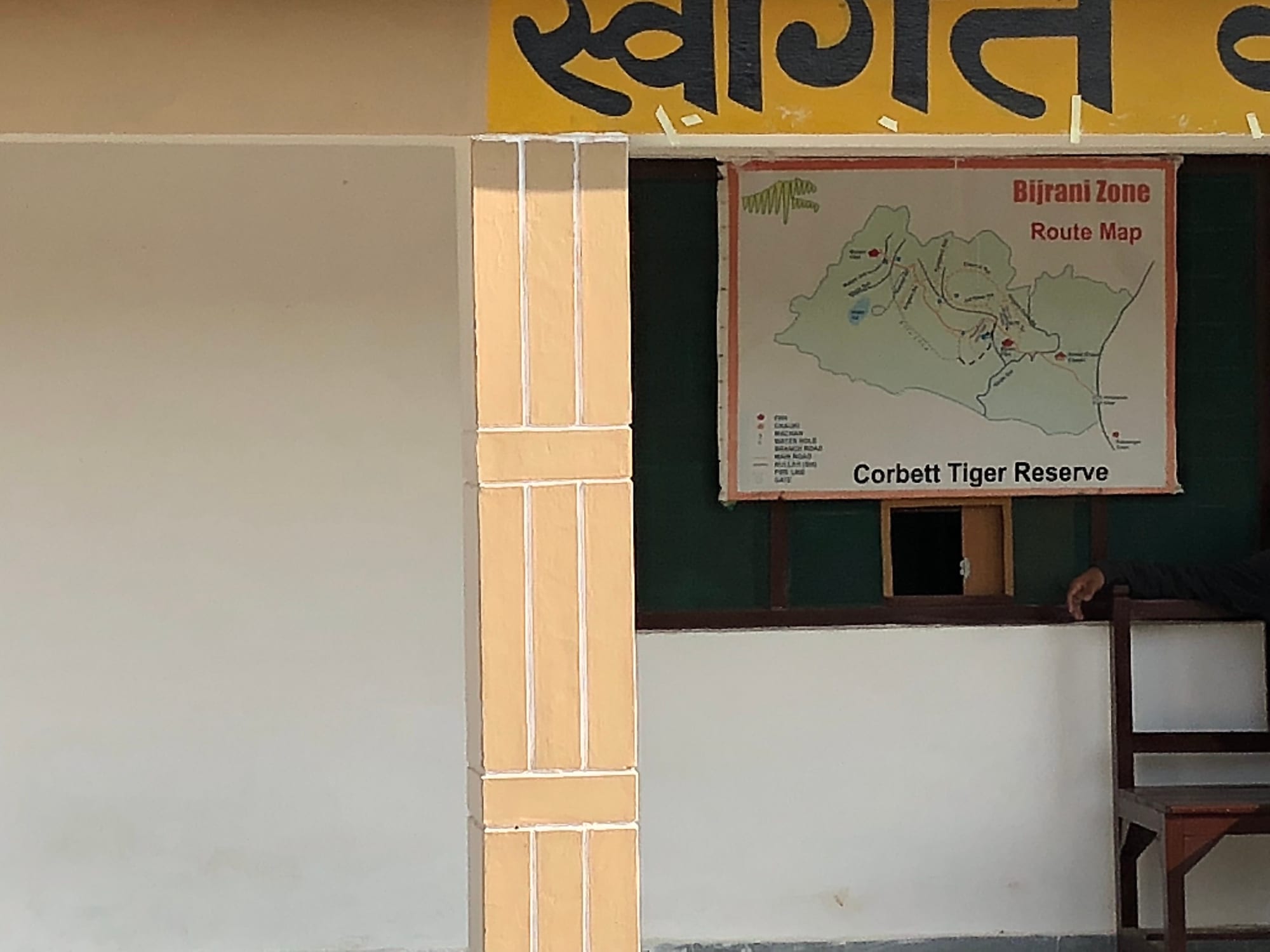
I had to write today's post early so all the awesomeness would remain fresh in my head.
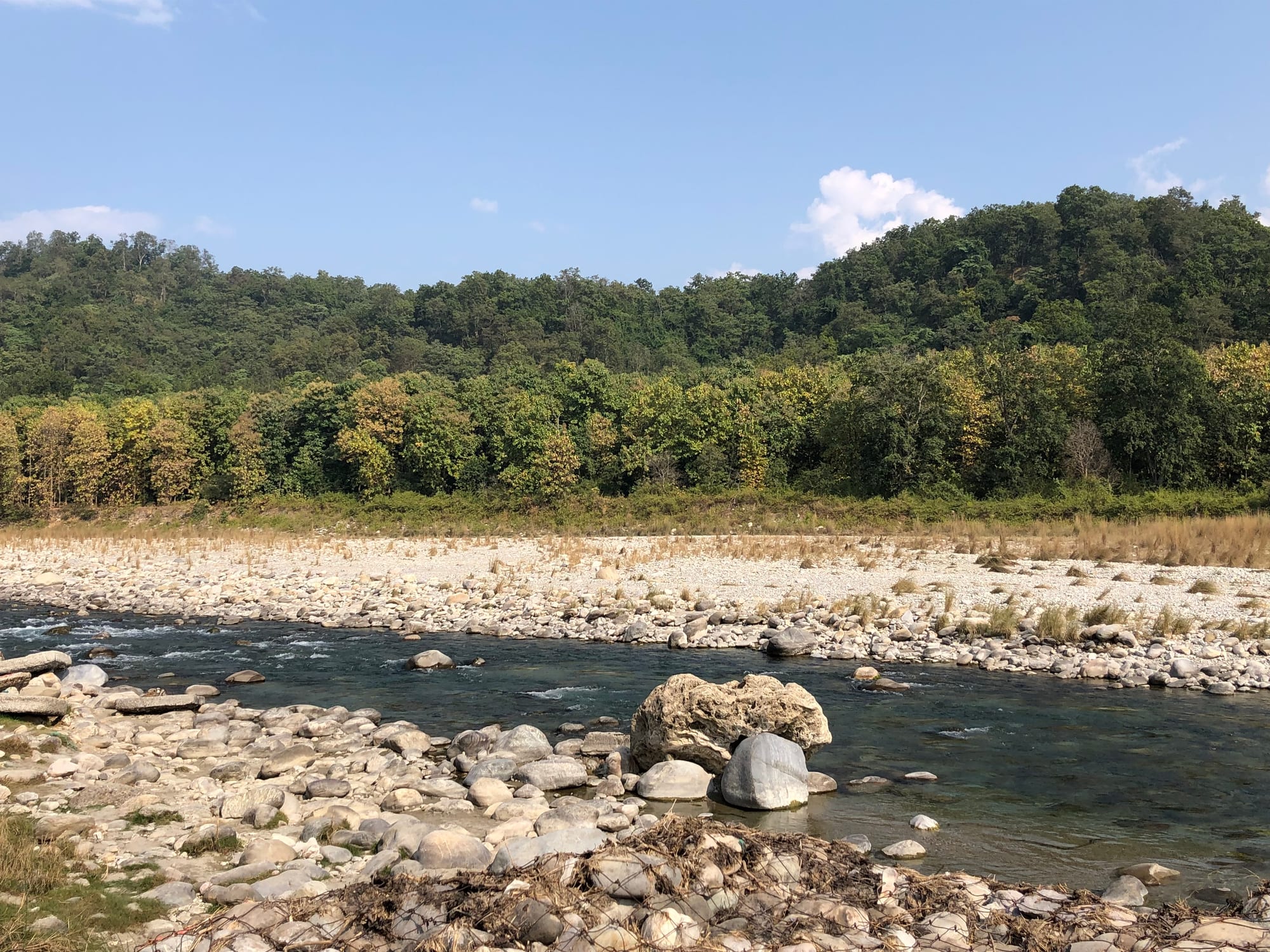
Before I get into the nitty gritty, a funny story. We reached the resort at Corbett yesterday and scored an awesome room right on the River Kosi. After settling in, I went out to get some dinner. On our way back we stopped at a few general stores to get some butter and jam for breakfast today. Turns out there was only one store that had it. All of the others did offer us sauce (ketchup) instead because of course, that is a sensible replacement. In India, ketchup can replace anything 🤪
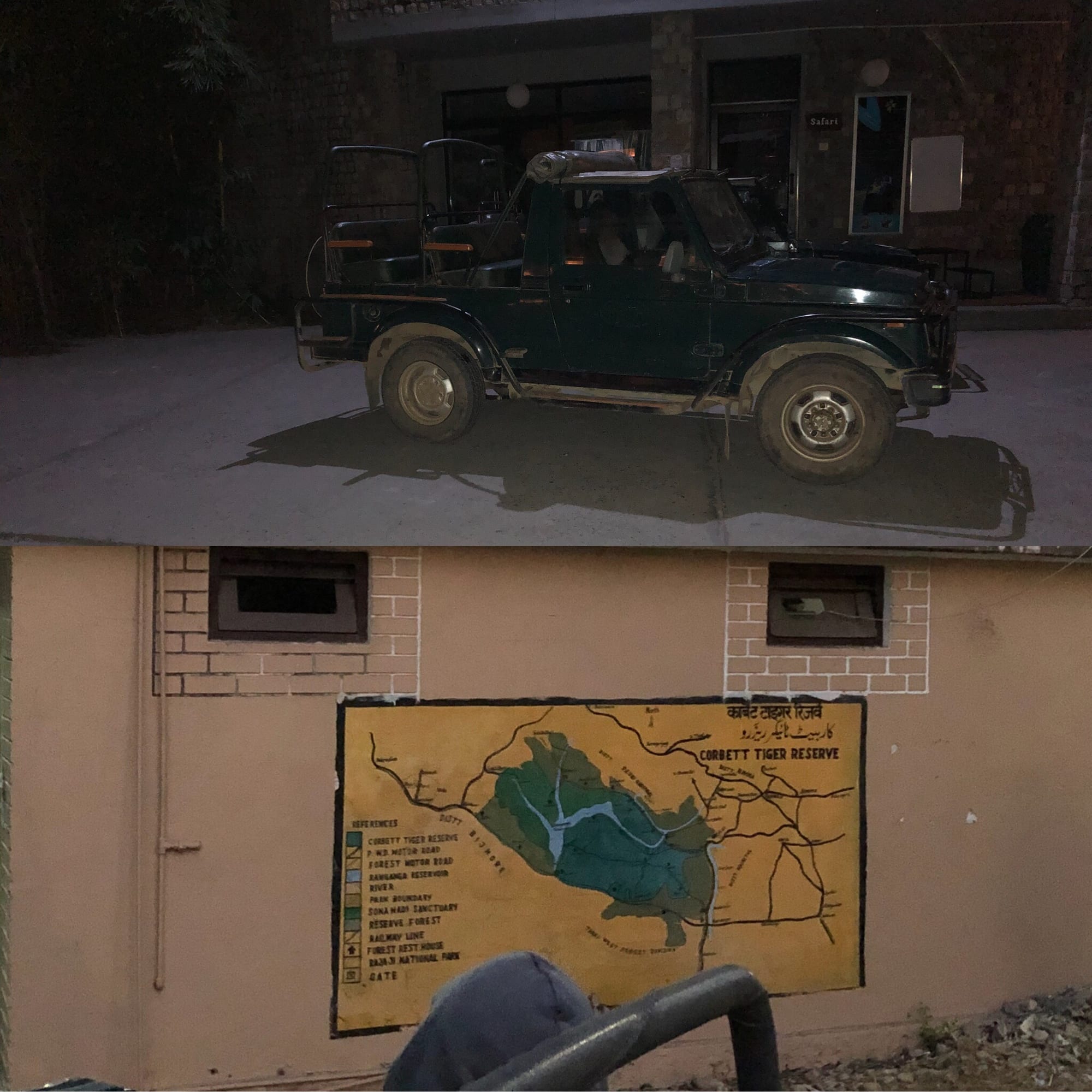
 Anyway, enough small talk. We were up at 5 this morning and ready for our safari at 6. We headed out in a vehicle called a Gypsy with our driver Bhupinder and got into the park around 6:30am (picked up our awesome guide Mahindra at the entrance). I'm going to try to walk you through my experience as best I can.
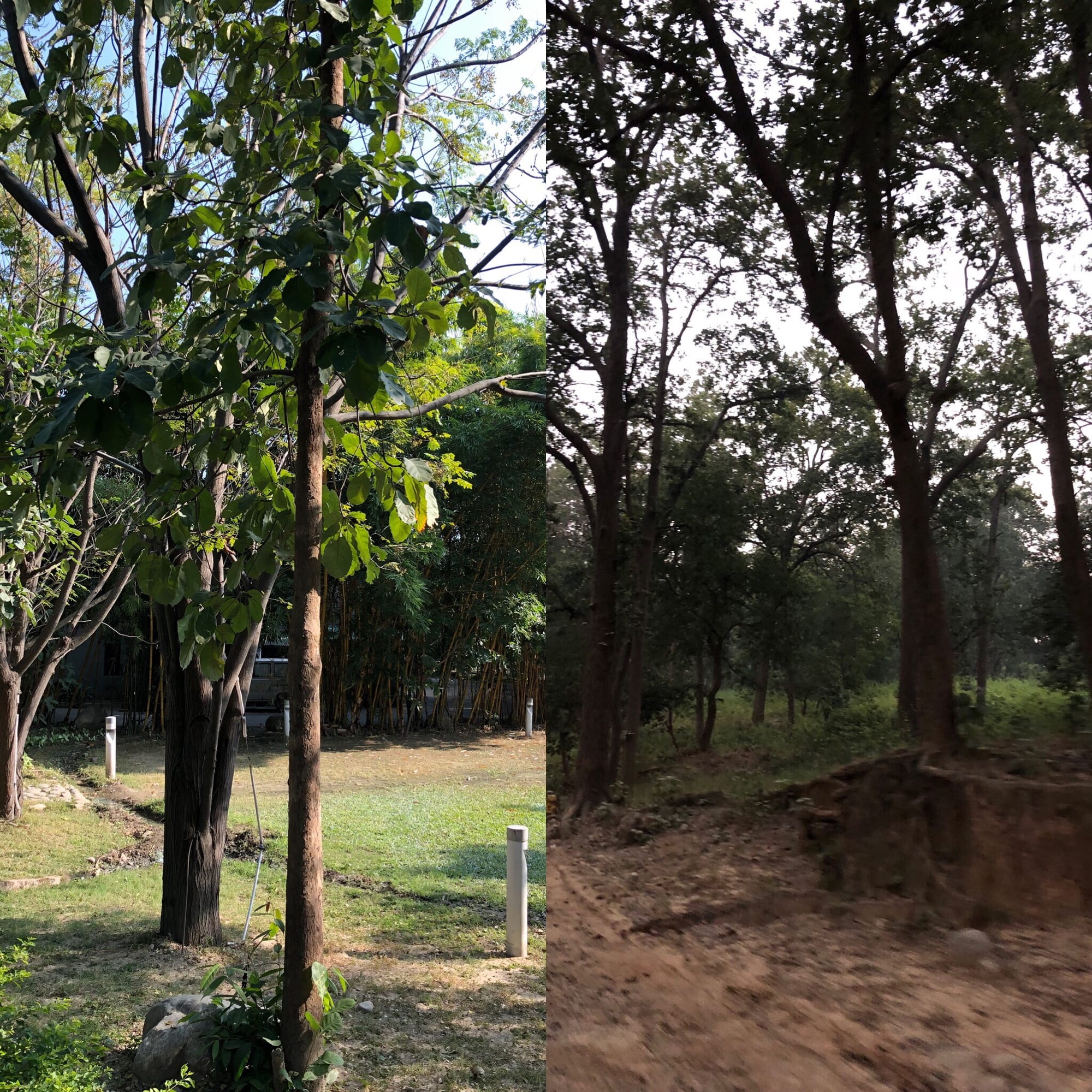
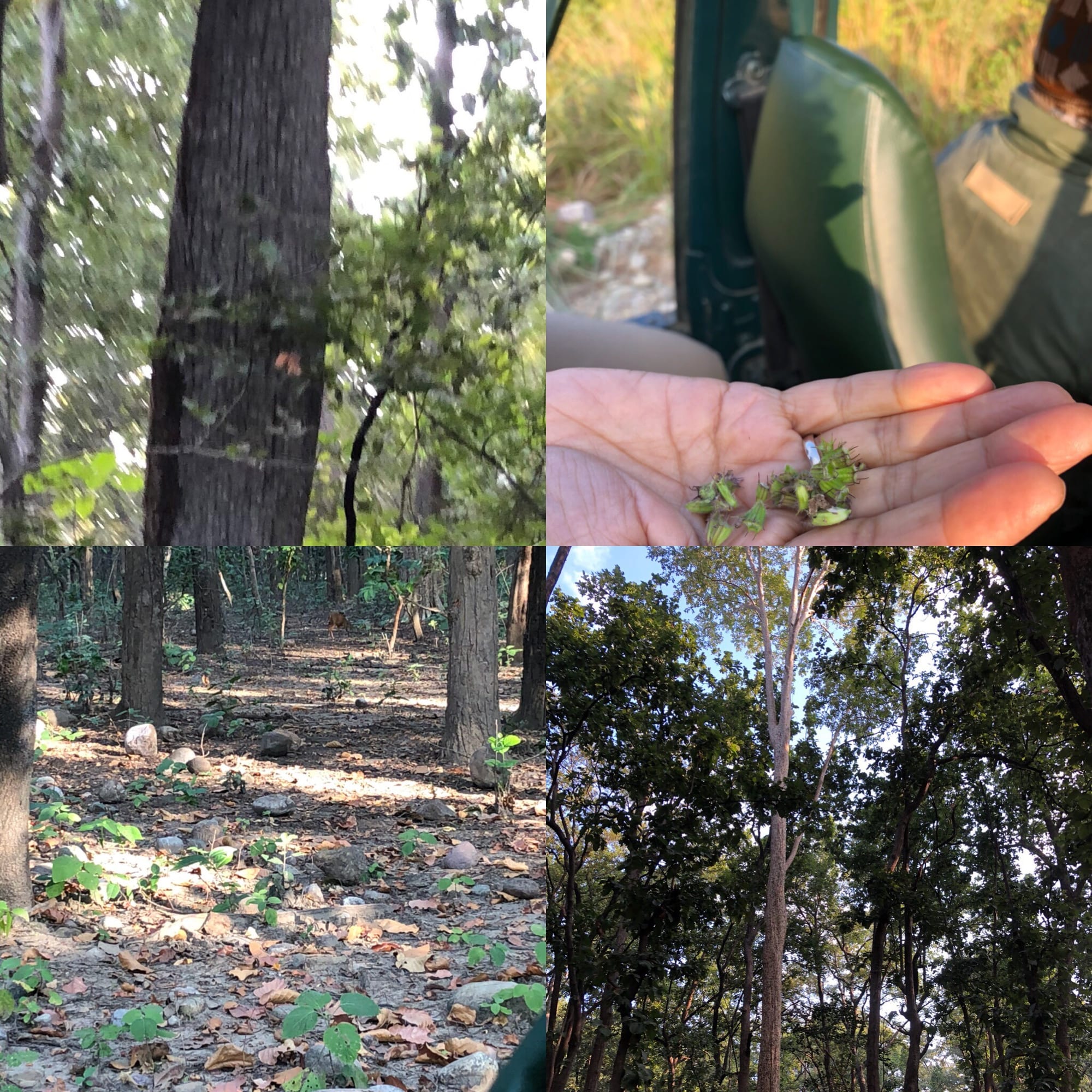
 We rented a set of binoculars for Rs 100 but barely needed to use it. The guide was great at answering all our questions and tried really hard to show us as much as he could. After a rundown on the rules - stay in the car, keep the area clean, this is the animals natural habitat - not ours, he gave us a quick introduction of the local flora. The government has planted a lot of Teak trees in the area to help the wood industry. They do not originate here. Local wood generally comes from Sal trees. The tree on the left below is a Teak tree, the one on the right is the Sal tree. Interesting saying about the Sal tree here - Sal sau saal jeeye, Sal sau saal pade, Sal sau saal sade (Sal lives for a 100 years, stays fallen for a 100 years and rots for a 100 years).
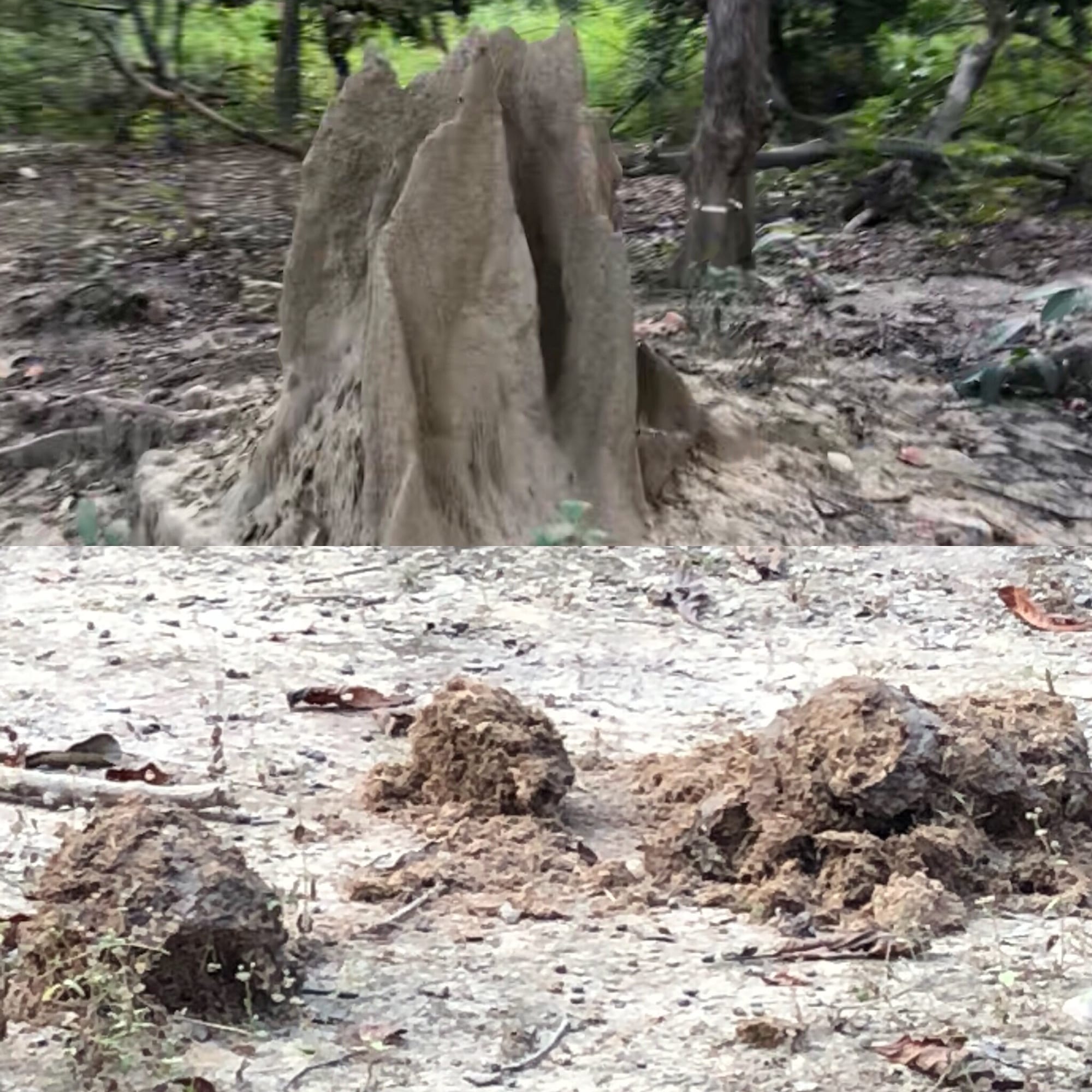
 There are also a number of termite fields in the area and we saw some evidence of it. As we drove into the park, we saw plenty of elephant dung. Our guide told us that they sometimes use the dung to estimate the count of elephants in an area. For your viewing pleasure, I included a picture of termite work and dung for you 😉.
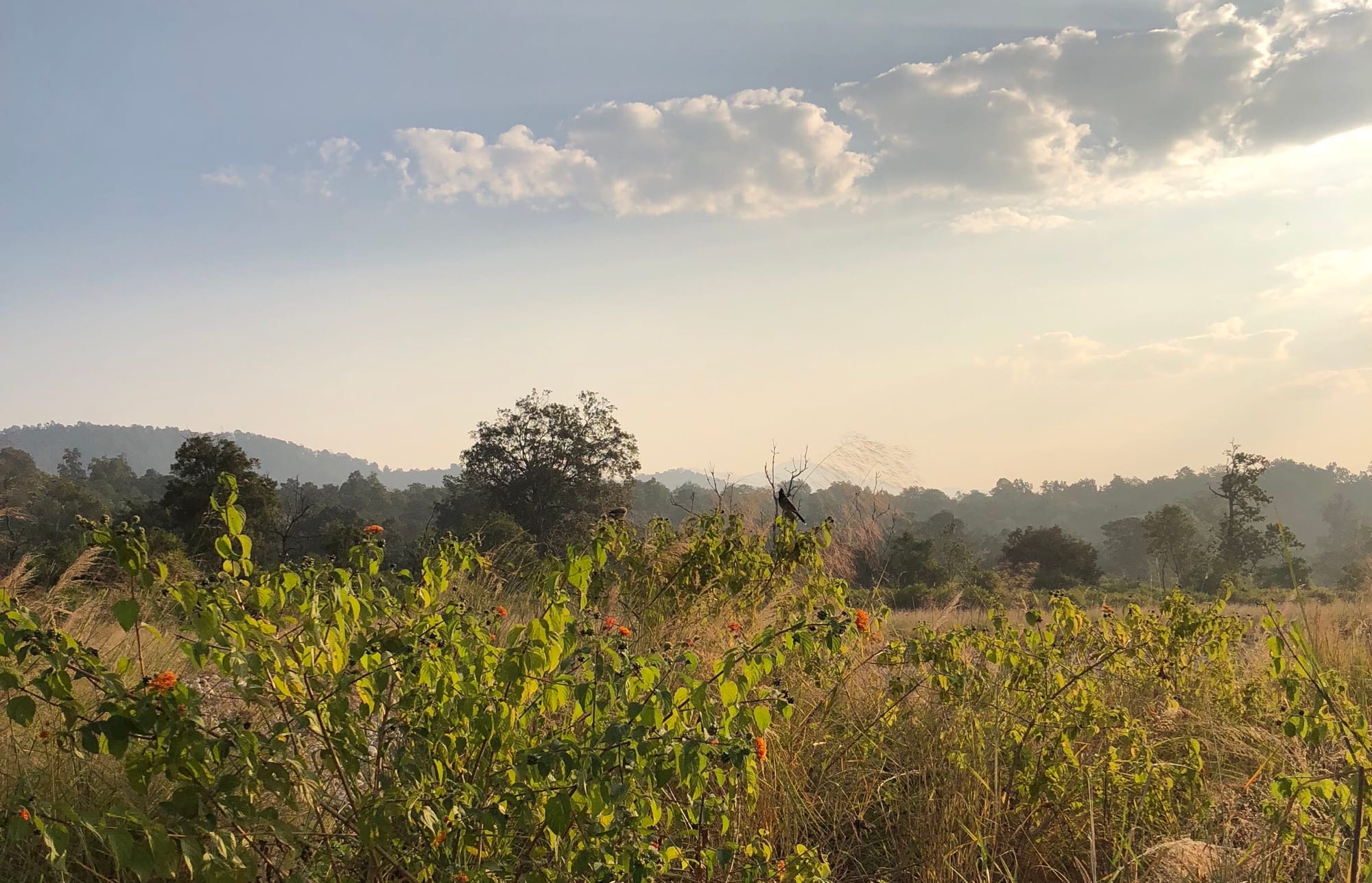
 The park was founded in 1936 and is home to a large variety of animals. They have five different zones with their own entrances and allow 30 cars at each entrance in the morning and 30 in the evening. We used the Bijrani entrance. Animals that call this their home include monkeys, spotted deer, barking deer, sambar deer, tigers, leopards, elephants, jackals, wild boar and some others. The guide mentioned that this park may have once been a river that originated in the Himalayas causing its rich flora and fauna.
We slowly made our way to the Bijrani campus which was built by the Britishers in 1928. As we headed there, there was a poor little lost dog running along the path. Thankfully, on getting to the campus, one of the guards helped him out. Rouella's breaking heart was saved. The campus hosts a guesthouse and the forest guards. After a quick stop, we kept going.
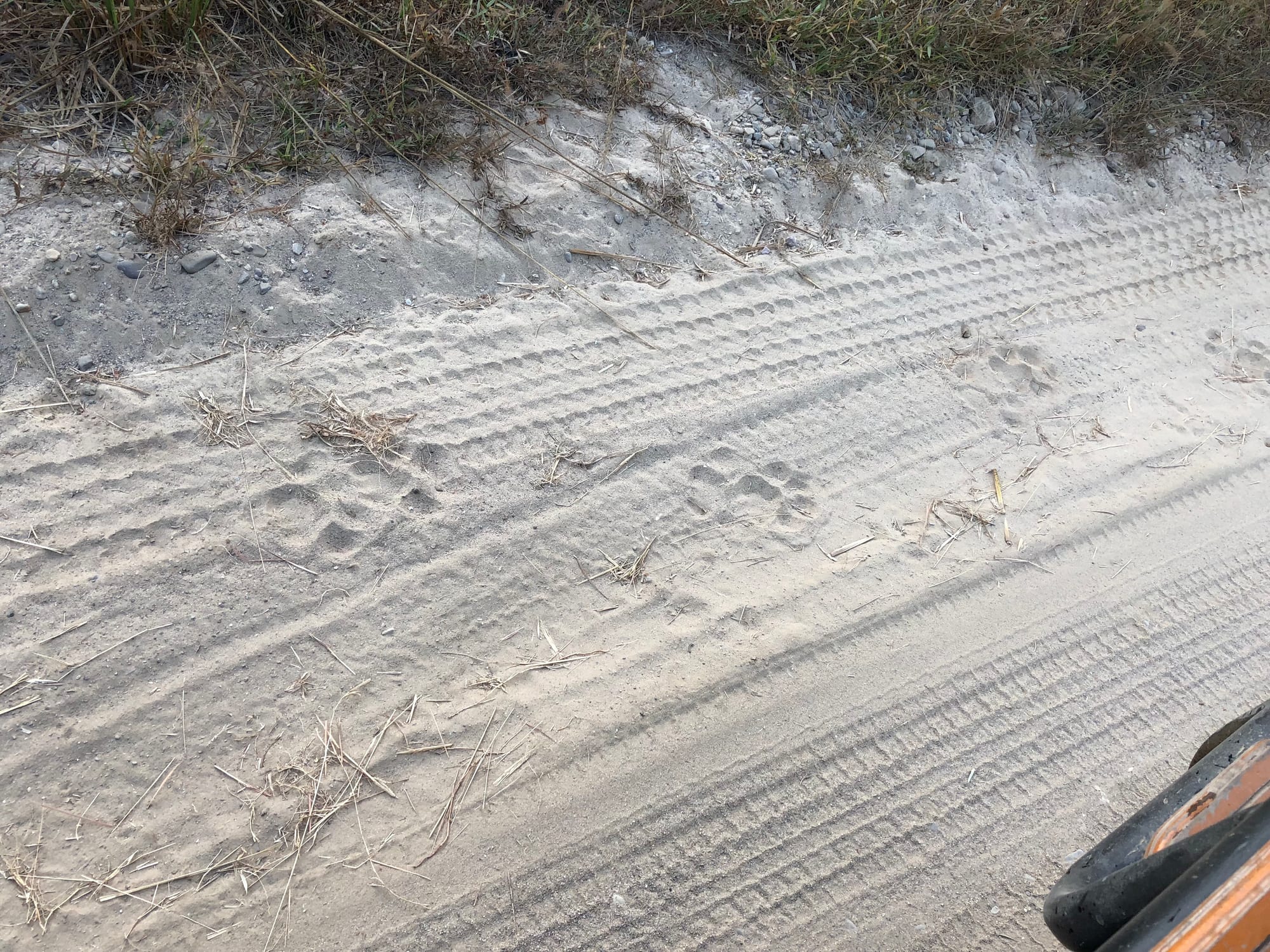
The jungle had plenty of spotted deer (we saw male and female deer) and they didn't seem the least bit bothered by us. We also spotted some parakeets, yellow billed babbler, and red tail Bulbul (didn't get a good picture of them). Our bird watching attention was soon diverted by tiger paw prints on the ground. There were bigger prints and smaller ones. Apparently there is a tigress in the area with three cubs and the prints were fresh.
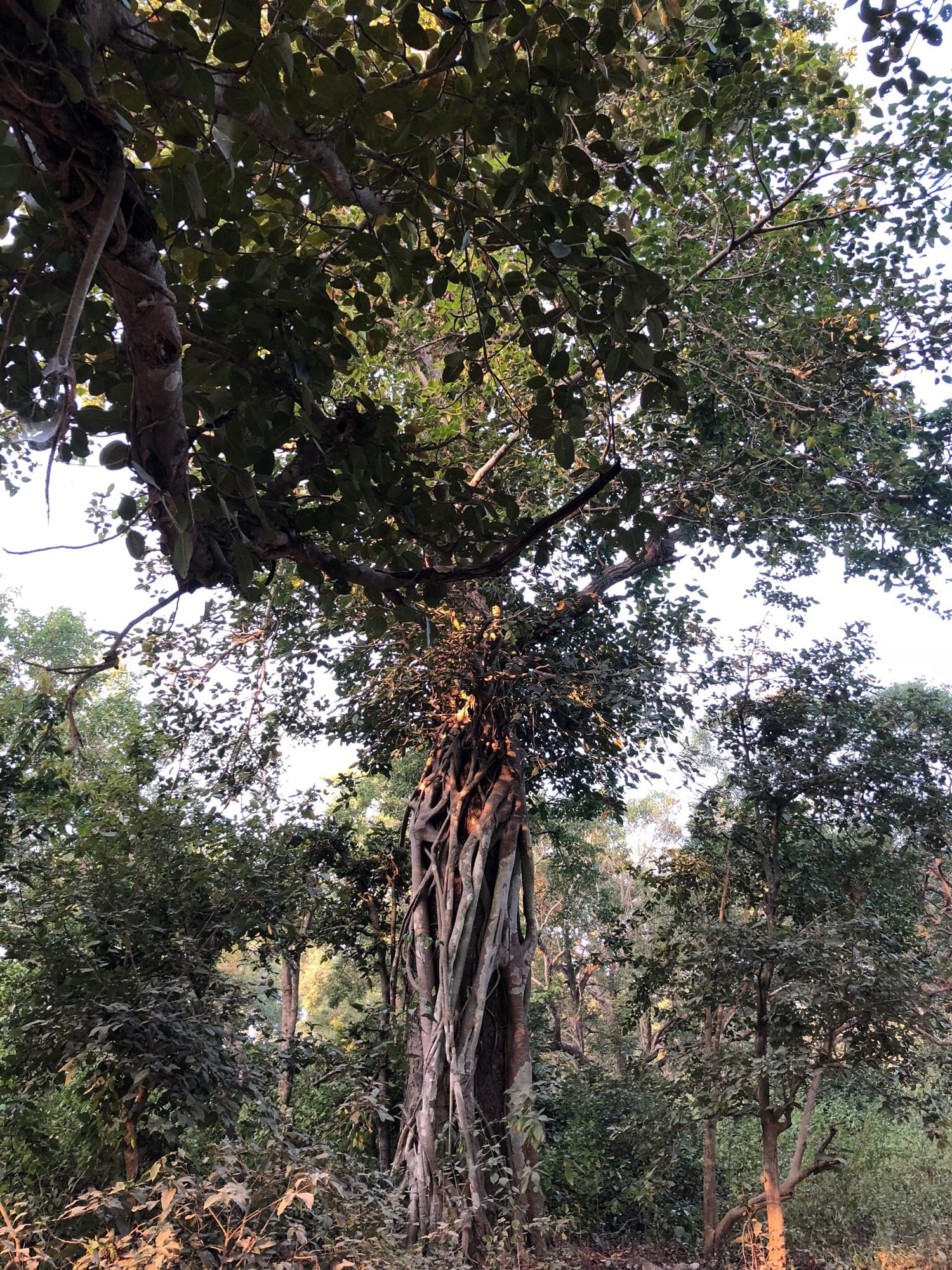
 There were a lot of banyan and peepal trees in the area. They both grow above the ground and you find them growing on top of anything. The Peepal tree is revered in many parts of India. The original significance of it is scientific. They are known to provide oxygen 22 hours a day making them extremely valuable.
 Talking about plants that grow anywhere, the most destructive plant in the forest is the below orange flower. They were planted by a Britisher for his garden many years ago and were spread by birds and monkeys everywhere. These pretty little flowers have now destroyed more than 30 plant species. They are currently investigating programs to curb it's growth.
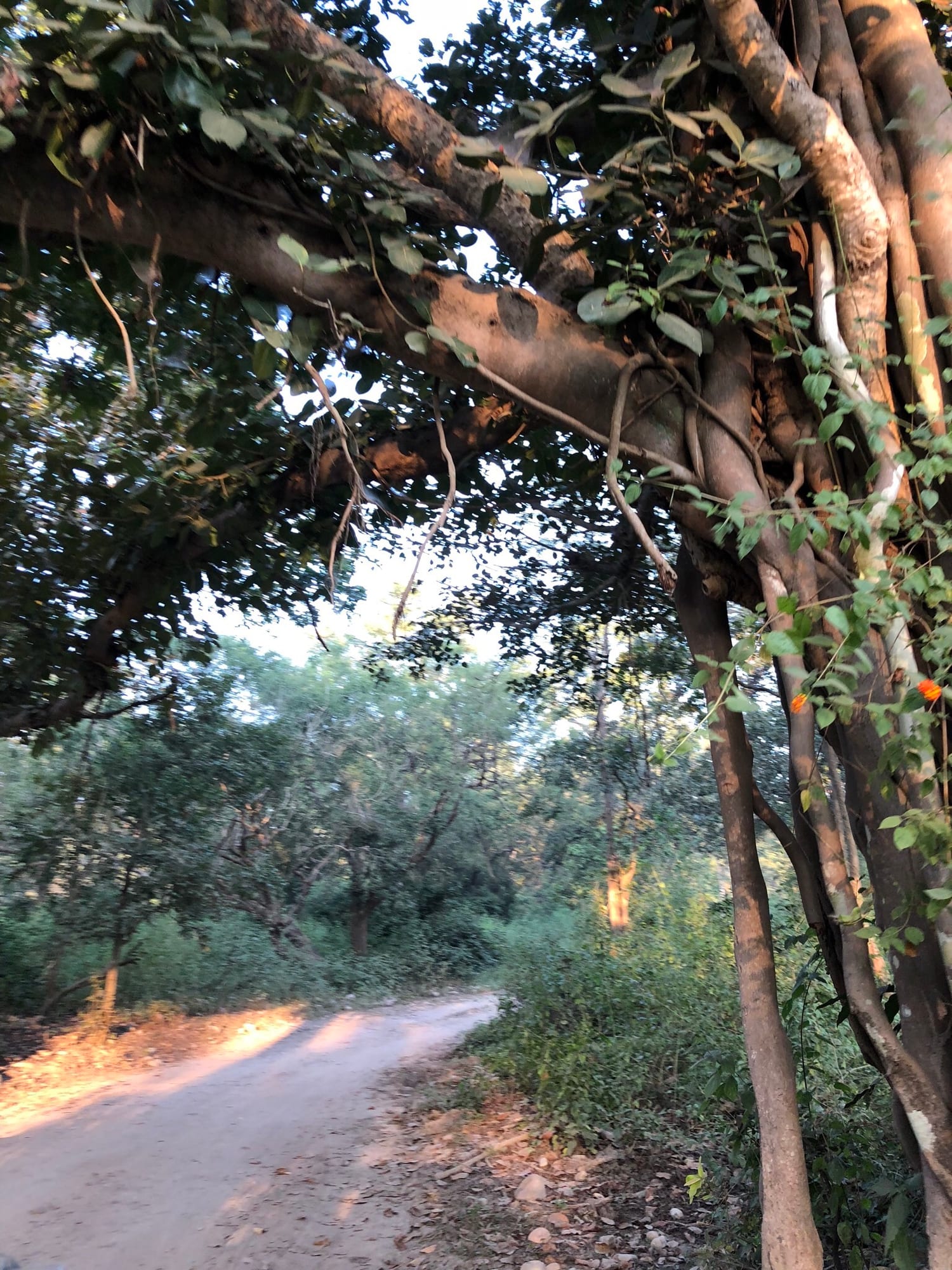 Some other interesting flora we saw included the Crocodile bark tree (bark like crocodile skin), wild Tulsi (holy basil), Chlorodendron, and the Barkley. The forest is known for its biodiversity and the variety of topography it hosts.
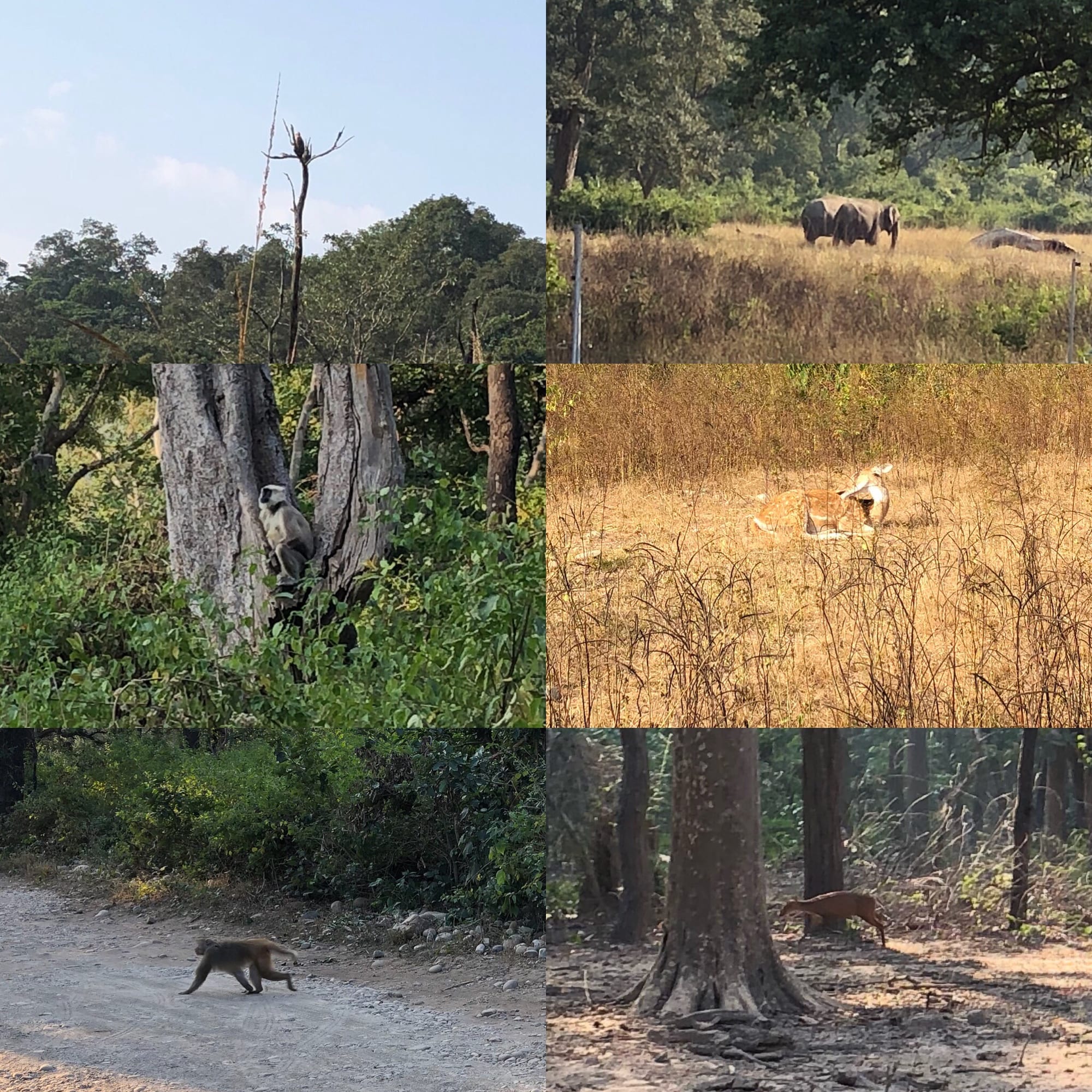
 The "no getting out of the car" rule was waived at one particular spot. As we took photographs and stretched, there was a monkey there ready to grab everyone's bags. It even jumped into a few jeeps and elicited some shrieks before being driven away 😂. Talking about monkeys, here is a fun fact I learned about the spotted deer and baboons. They have developed a mutual dependency on each other. The deers depend on the baboons to see far from the tops of trees and warn them of impending danger. They also drop leaves for the deer to eat. Similarly the baboons rely on the deers' keen sense of smell to warn them about predators, find food for them etc... As such you will always see the two hang out close together. Here are some pictures of the animals we saw - spotted deer, barking deer, baboons, monkeys, elephants. We even saw an eagle.
 So, I bet you all are thinking - this is a tiger reserve right, where are the tigers at? We were warned at the beginning that we had a 50 percent chance of seeing a tiger. We looked in the area of the paw prints we saw earlier, stopped at places to hear animal alarm calls and spoke to other guides. Apparently, there was a sambar deer alarm call in the area. The sambar deer raises alarm calls only when tigers and leopards are close. Another Gypsy followed the call and spotted a tigress. Unfortunately a bunch of jeeps headed there and disturbed her so she went inland to nap before we got there. Missed her by five minutes. Her name is Sharmili and she is older and cranky 😊 - she just wanted to nap in peace. She probably spotted us four times in the time we were looking for her.
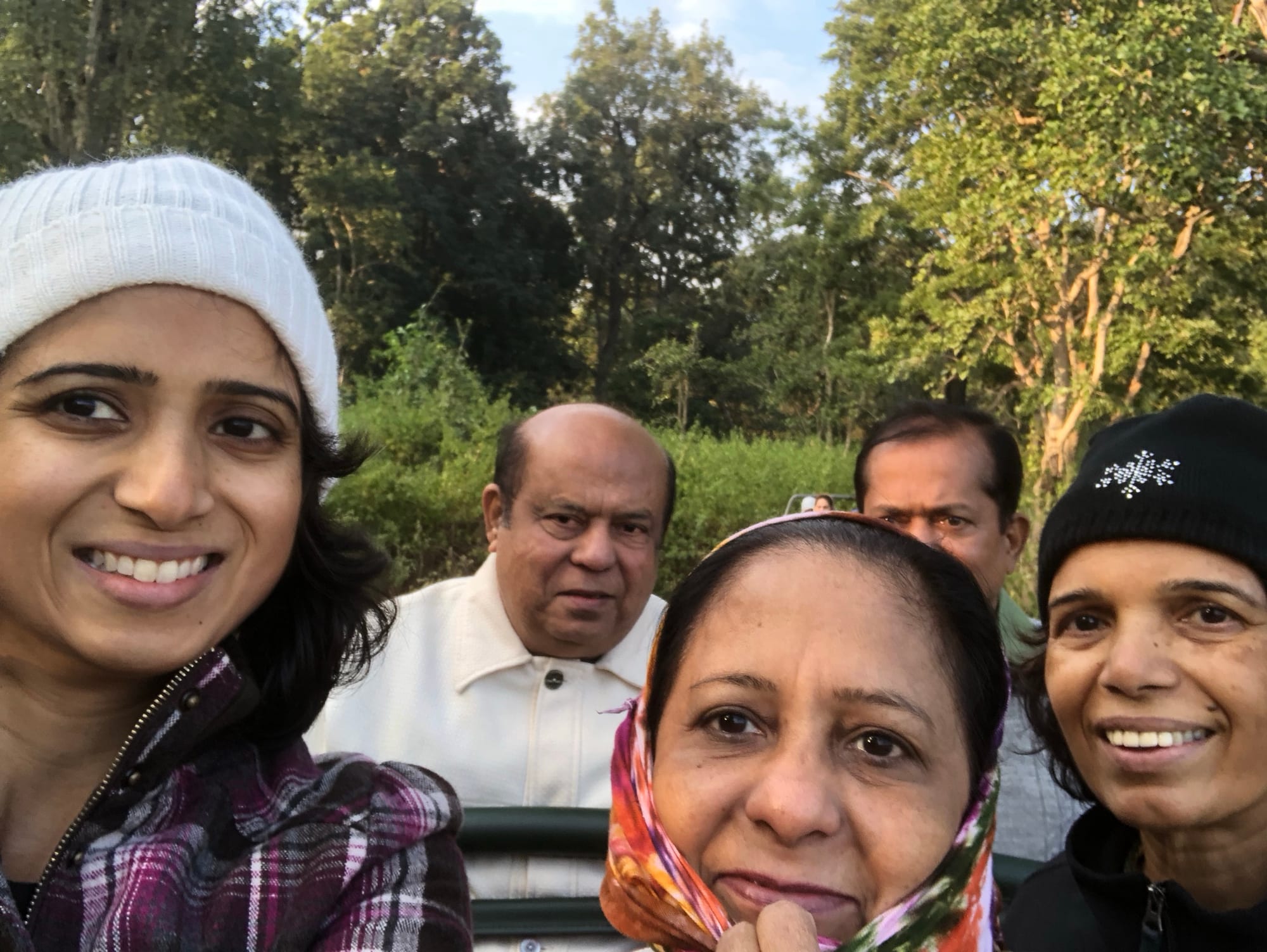
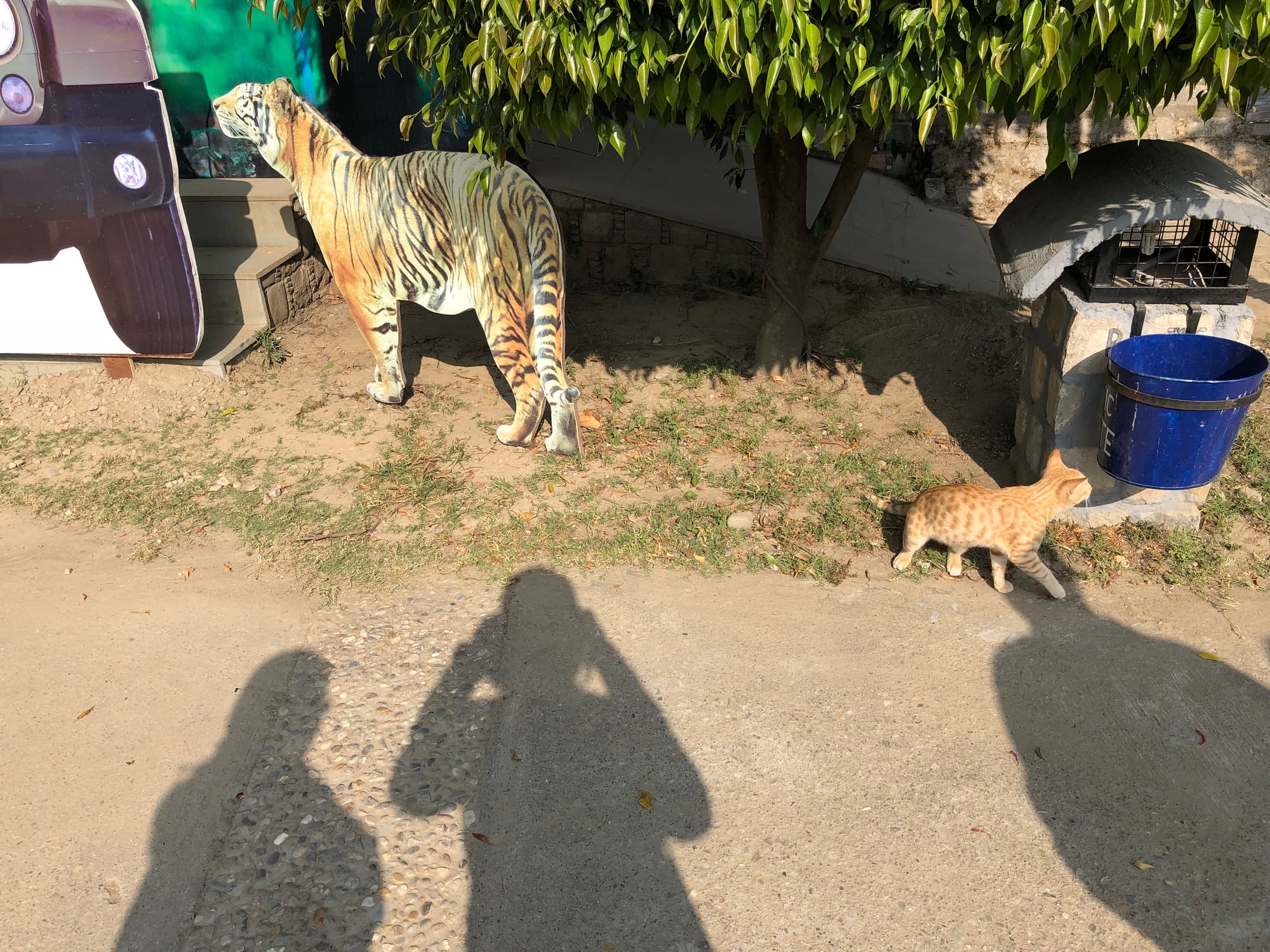
Although we missed seeing a tiger, the safari was still awesome and I had a great time. Ending with a picture of some happy faces at the safari and a little tiger we saw when we got back trying to meet a big one.
Anyway, enough small talk. We were up at 5 this morning and ready for our safari at 6. We headed out in a vehicle called a Gypsy with our driver Bhupinder and got into the park around 6:30am (picked up our awesome guide Mahindra at the entrance). I'm going to try to walk you through my experience as best I can.
We rented a set of binoculars for Rs 100 but barely needed to use it. The guide was great at answering all our questions and tried really hard to show us as much as he could. After a rundown on the rules - stay in the car, keep the area clean, this is the animals natural habitat - not ours, he gave us a quick introduction of the local flora. The government has planted a lot of Teak trees in the area to help the wood industry. They do not originate here. Local wood generally comes from Sal trees. The tree on the left below is a Teak tree, the one on the right is the Sal tree. Interesting saying about the Sal tree here - Sal sau saal jeeye, Sal sau saal pade, Sal sau saal sade (Sal lives for a 100 years, stays fallen for a 100 years and rots for a 100 years).
There are also a number of termite fields in the area and we saw some evidence of it. As we drove into the park, we saw plenty of elephant dung. Our guide told us that they sometimes use the dung to estimate the count of elephants in an area. For your viewing pleasure, I included a picture of termite work and dung for you 😉.
The park was founded in 1936 and is home to a large variety of animals. They have five different zones with their own entrances and allow 30 cars at each entrance in the morning and 30 in the evening. We used the Bijrani entrance. Animals that call this their home include monkeys, spotted deer, barking deer, sambar deer, tigers, leopards, elephants, jackals, wild boar and some others. The guide mentioned that this park may have once been a river that originated in the Himalayas causing its rich flora and fauna.
We slowly made our way to the Bijrani campus which was built by the Britishers in 1928. As we headed there, there was a poor little lost dog running along the path. Thankfully, on getting to the campus, one of the guards helped him out. Rouella's breaking heart was saved. The campus hosts a guesthouse and the forest guards. After a quick stop, we kept going.
The jungle had plenty of spotted deer (we saw male and female deer) and they didn't seem the least bit bothered by us. We also spotted some parakeets, yellow billed babbler, and red tail Bulbul (didn't get a good picture of them). Our bird watching attention was soon diverted by tiger paw prints on the ground. There were bigger prints and smaller ones. Apparently there is a tigress in the area with three cubs and the prints were fresh.
There were a lot of banyan and peepal trees in the area. They both grow above the ground and you find them growing on top of anything. The Peepal tree is revered in many parts of India. The original significance of it is scientific. They are known to provide oxygen 22 hours a day making them extremely valuable.
Talking about plants that grow anywhere, the most destructive plant in the forest is the below orange flower. They were planted by a Britisher for his garden many years ago and were spread by birds and monkeys everywhere. These pretty little flowers have now destroyed more than 30 plant species. They are currently investigating programs to curb it's growth.
Some other interesting flora we saw included the Crocodile bark tree (bark like crocodile skin), wild Tulsi (holy basil), Chlorodendron, and the Barkley. The forest is known for its biodiversity and the variety of topography it hosts.
The "no getting out of the car" rule was waived at one particular spot. As we took photographs and stretched, there was a monkey there ready to grab everyone's bags. It even jumped into a few jeeps and elicited some shrieks before being driven away 😂. Talking about monkeys, here is a fun fact I learned about the spotted deer and baboons. They have developed a mutual dependency on each other. The deers depend on the baboons to see far from the tops of trees and warn them of impending danger. They also drop leaves for the deer to eat. Similarly the baboons rely on the deers' keen sense of smell to warn them about predators, find food for them etc... As such you will always see the two hang out close together. Here are some pictures of the animals we saw - spotted deer, barking deer, baboons, monkeys, elephants. We even saw an eagle.
So, I bet you all are thinking - this is a tiger reserve right, where are the tigers at? We were warned at the beginning that we had a 50 percent chance of seeing a tiger. We looked in the area of the paw prints we saw earlier, stopped at places to hear animal alarm calls and spoke to other guides. Apparently, there was a sambar deer alarm call in the area. The sambar deer raises alarm calls only when tigers and leopards are close. Another Gypsy followed the call and spotted a tigress. Unfortunately a bunch of jeeps headed there and disturbed her so she went inland to nap before we got there. Missed her by five minutes. Her name is Sharmili and she is older and cranky 😊 - she just wanted to nap in peace. She probably spotted us four times in the time we were looking for her.
Although we missed seeing a tiger, the safari was still awesome and I had a great time. Ending with a picture of some happy faces at the safari and a little tiger we saw when we got back trying to meet a big one.
Comments